
Gum Disease Treatment
Gum Disease Treatment in Chembur, Mumbai
Gum Disease Treatment in Chembur, Mumbai
Bleeding gums, bad breath, swollen gums, or loose teeth should never be ignored. These may be early or advanced signs of gum disease, a condition that can gradually damage the tissues and bone supporting your teeth.
At Adorn Dentistry, we provide personalized gum disease treatment in Chembur, Mumbai, with a strong focus on early diagnosis, specialist-led periodontal care, and long-term prevention.
Our treatment approach may include professional cleaning, deep cleaning, laser-assisted gum therapy, periodontal procedures, and ongoing maintenance, depending on the severity of your condition.
The earlier gum disease is detected, the better the opportunity to protect your natural teeth and prevent further damage.
Book your gum health consultation today and take the first step toward healthier gums.
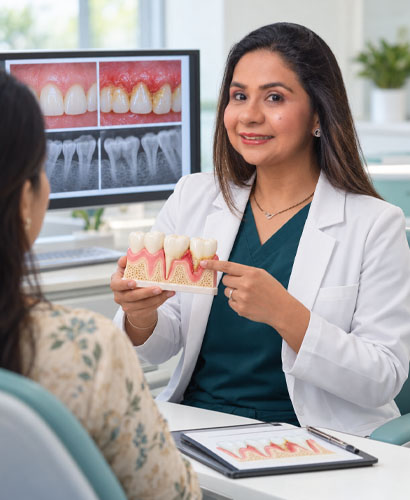
What is Gum Disease?
Gum disease, also known as periodontal disease, is an infection and inflammation of the tissues that surround and support the teeth.
It usually begins when plaque, a sticky layer of bacteria, collects around the gum line. If plaque is not removed properly, it can harden into tartar and irritate the gums.
Without timely care, gum disease may progress from mild inflammation to deeper infection, bone loss, gum recession, tooth mobility, and eventually tooth loss.
Gum disease can often develop quietly. Some patients may not experience significant pain until the condition becomes more advanced.
What Causes Gum Disease?
The most common cause of gum disease is bacterial plaque around the teeth and gums. Several factors may increase the risk or severity of gum problems, including:
- Inadequate brushing and flossing
- Irregular professional dental cleaning
- Tobacco use
- Diabetes
- Hormonal changes
- Family history of gum disease
- Stress
- Certain medications
- Reduced immunity
- Poorly fitting crowns or dental restorations
- Crooked teeth that are difficult to clean
- Teeth grinding or clenching
- Dry mouth
- Poor nutrition
Some patients may develop gum disease even when they do not have obvious symptoms, making routine dental examinations important.
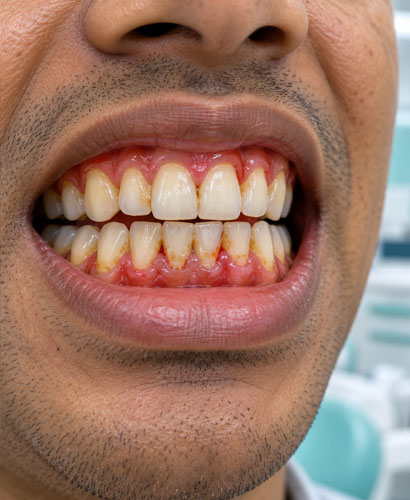
Stages of Gum Disease
Gingivitis
Gingivitis is the earliest stage of gum disease.
Common signs include: Bleeding while brushing or flossing, Red or swollen gums, Mild gum tenderness, Bad breath & Plaque and tartar buildup.
At this stage, the supporting bone is usually not permanently damaged. With professional cleaning and improved oral hygiene, gingivitis can often be controlled successfully.
Periodontitis
If gingivitis is left untreated, the infection may spread below the gum line and affect the tissues and bone supporting the teeth.
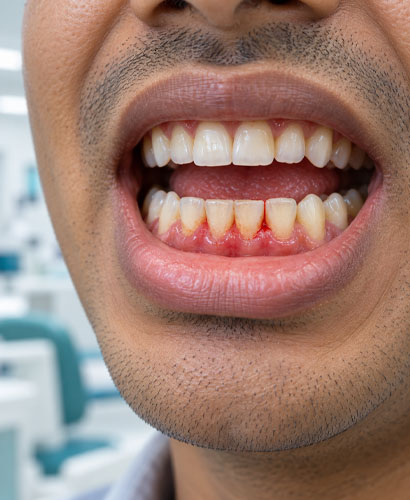
Signs of periodontitis may include: Persistent bleeding gums, Gum recession, Pus around the gums, Deep spaces between teeth and gums, Loose teeth, Changes in bite, Tooth sensitivity, Persistent bad breath & Bone loss around the teeth.
Periodontitis requires professional treatment and ongoing maintenance to help control the infection and reduce further damage.
Benefits of a Smile Makeover
A smile makeover offers more than cosmetic improvement.
Enhanced Confidence
Feel more comfortable smiling, speaking, and interacting with others.
Natural-Looking Results
Every treatment is carefully planned to complement your facial features and preserve a natural appearance.
Improved Oral Health
Many cosmetic treatments also improve dental function, bite, and long-term oral health.
Personalized Treatment
No two smile makeovers are the same. Every plan is customized to your goals.
Long-Lasting Results
With proper care and regular dental visits, your new smile can remain beautiful for years.
Our Gum Disease Treatment Process
Step 1: Gum Health Consultation
We begin by discussing your symptoms, medical history, dental habits, previous treatment, and concerns.
Step 2: Periodontal Examination
Your gums are carefully assessed for: Bleeding, Swelling, Gum recession, Plaque and tartar, Gum pocket depth, Tooth mobility, Bone support, Bite changes & Infection. Diagnostic imaging may be used to check the bone around your teeth.
Step 3: Personalized Treatment Plan
We explain: The stage of gum disease, Areas affected, Recommended treatment, Expected number of visits, Home-care requirements, Maintenance schedule & Estimated treatment cost
Step 4: Active Gum Treatment
Treatment may include professional cleaning, deep cleaning, laser therapy, or surgical care depending on the diagnosis.
Step 5: Healing and Review
The gums are reassessed after treatment to evaluate healing and determine whether additional care is required.
Step 6: Periodontal Maintenance
Regular maintenance visits help control plaque, monitor gum pockets, and reduce the risk of disease returning.
Can Gum Disease Be Cured?
Early gum inflammation, or gingivitis, can often be reversed with professional cleaning and consistent home care.
Advanced gum disease, or periodontitis, cannot always be completely reversed because lost bone and supporting tissue may not fully return naturally.
However, it can often be controlled with professional treatment, good daily oral hygiene, and regular periodontal maintenance.
The primary goals are to:
- Control infection
- Reduce inflammation
- Slow further tissue and bone loss
- Preserve natural teeth
- Improve gum comfort
- Maintain long-term oral health
What Happens If Gum Disease Is Left Untreated?
Untreated gum disease may gradually lead to:
- Continued gum bleeding
- Persistent bad breath
- Gum recession
- Tooth sensitivity
- Loss of supporting bone
- Loose teeth
- Changes in bite
- Tooth migration
- Dental abscesses
- Tooth loss
- Reduced suitability for implants or cosmetic treatment
Early diagnosis generally allows simpler treatment and helps reduce the risk of permanent damage.
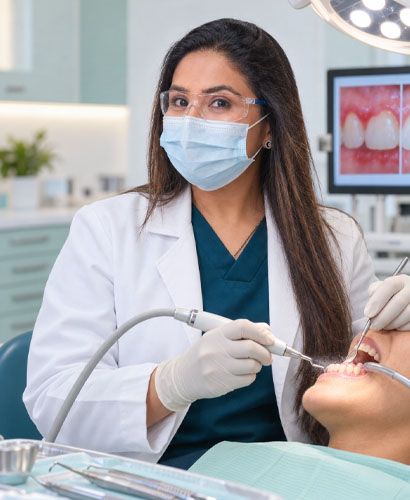
Why Choose Adorn Dentistry for Gum Disease Treatment?
Adorn Dentistry places gum health at the foundation of every successful smile. Patients choose us because we provide:
- Specialist-led periodontal care
- Comprehensive gum examinations
- Early-stage and advanced gum disease treatment
- Scaling and root planing
- Laser-assisted gum procedures
- Gum recession management
- Gum depigmentation
- Gummy smile correction
- Flap surgery and bone grafting where indicated
- Personalized maintenance schedules
- Gum evaluation before implants and cosmetic treatment
- Clear explanations and ethical recommendations
- Patient-focused care in Chembur, Mumbai
Our aim is not simply to stop bleeding gums. We focus on preserving the supporting foundation of your teeth and maintaining long-term oral health.
Frequently Asked Questions
1. Why do my gums bleed while brushing?
Bleeding gums are commonly caused by plaque-related inflammation, although other factors may contribute. Regular bleeding should be evaluated by a dentist rather than ignored.
2. Can gum disease cause tooth loss?
Yes. Advanced gum disease can damage the bone and tissues supporting the teeth, causing teeth to become loose and eventually requiring removal.
3. Is gum disease treatment painful?
Treatment is planned to maintain comfort. Local anesthesia may be used for deep cleaning or surgical procedures. Temporary tenderness or sensitivity may occur afterward.
4. How long does gum disease treatment take?
The timeline depends on the stage and extent of disease. Early inflammation may require professional cleaning and home-care improvement, while advanced cases may need multiple visits and ongoing maintenance.
5. Can bleeding gums be treated with mouthwash alone?
Mouthwash may support oral hygiene, but it does not remove hardened tartar or treat deep infection below the gum line. A professional examination is recommended.
6. What is deep cleaning?
Deep cleaning, also called scaling and root planing, removes plaque and tartar from below the gum line and cleans the root surfaces to help the gums heal.
7. Is laser gum treatment better than regular treatment?
Laser treatment may offer benefits in selected cases, but it is not suitable or necessary for every patient. The best approach depends on the diagnosis and severity of gum disease.
8. Can receding gums grow back?
Receded gums do not usually grow back naturally. However, treatment can help control the cause, reduce sensitivity, and in selected cases restore coverage through gum grafting.
9. How often should I have gum maintenance?
The recommended schedule depends on your gum condition and risk factors. Some patients require maintenance more frequently than routine six-month visits.
10. Can gum disease return after treatment?
Yes. Gum disease can recur if plaque builds up again or maintenance is neglected. Daily oral hygiene and regular professional care are essential.
11. Can I get dental implants if I have gum disease?
Active gum disease should usually be treated first. Once the condition is controlled, implant suitability can be assessed based on gum health, bone support, and other factors.
12. Is bad breath a sign of gum disease?
Persistent bad breath can be associated with gum disease, plaque, tartar, tongue bacteria, cavities, dry mouth, or other conditions. A dental examination can help identify the cause.
13. Are loose teeth always removed?
Not necessarily. The treatment depends on the cause, amount of bone support, tooth mobility, and overall prognosis. Early periodontal treatment may help preserve some affected teeth.
14. How much does gum disease treatment cost?
The cost depends on the severity of gum disease, number of areas affected, type of treatment required, and number of visits. A personalized estimate is provided after examination.
Give Your Gums the Care They Deserve
Bleeding, swelling, bad breath, and gum recession are not problems you should learn to live with.
Timely periodontal care can help control infection, protect supporting bone, preserve natural teeth, and create a healthier foundation for your smile.
At Adorn Dentistry, we provide personalized gum disease treatment supported by specialist-led periodontal expertise and modern dental techniques.
Book your gum health consultation in Chembur today and protect your smile from the foundation up.